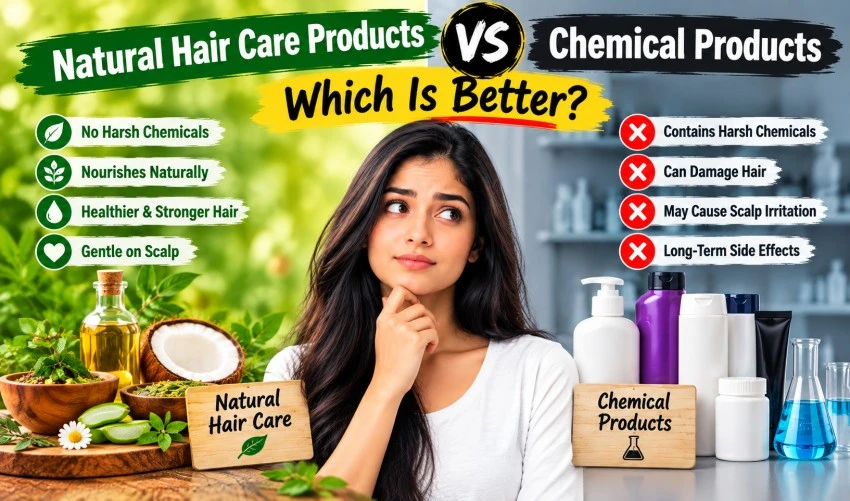
Walk down any hair care aisle and you’ll notice a clear divide. On one side are products labeled “natural,” “organic,” or “chemical-free.” On the other are conventional shampoos, conditioners, and treatments built on lab-made ingredients. Many people wonder whether going natural is genuinely healthier for their hair, or whether it’s mostly clever marketing.
The truth is more nuanced than either camp suggests. Here’s a balanced look at both options so you can decide what works best for your hair and scalp.
First, a Myth Worth Clearing Up
The phrase “chemical-free” is misleading. Everything, including water, is made of chemicals. Natural ingredients like coconut oil, aloe vera, and shea butter are chemical compounds too. The real question is not chemical versus natural, but whether an ingredient is safe, effective, and suited to your hair.
Also, “natural” is not a regulated term in many countries, so a product can use it on the label even if it contains only a small amount of plant-based ingredients. “Natural” does not automatically mean gentle, and “synthetic” does not automatically mean harmful.
What Are Natural Hair Care Products?
Natural products are formulated mainly with plant, mineral, or animal-derived ingredients, often with minimal processing. Common examples include:
- Oils: coconut, argan, olive, castor, and jojoba
- Botanicals: aloe vera, hibiscus, amla, shikakai, and neem
- Butters: shea and cocoa butter
- Herbal powders and rinses: reetha, fenugreek, and rice water
These are popular in many traditions, including Ayurvedic hair care, which has used herbs and oils for centuries.
What Are Chemical (Conventional) Hair Products?
Conventional products rely on lab-developed ingredients designed for consistent performance. Typical components include:
- Surfactants such as sodium lauryl sulfate, which create lather and remove oil
- Silicones like dimethicone, which smooth hair and reduce frizz
- Preservatives that prevent bacteria and mold
- Active treatments such as hair dyes, relaxers, keratin smoothing, and anti-dandruff agents like ketoconazole or zinc pyrithione
Advantages of Natural Hair Care
- Gentler formulas for many people. Natural shampoos often use milder cleansing agents, which can suit dry, sensitive, or color-treated hair.
- Nourishing ingredients. Oils and butters can add moisture, shine, and softness, and some may help reduce protein loss in hair strands.
- Fewer synthetic fragrances and dyes. If you react to artificial additives, simpler formulas may cause fewer problems.
- Environmental appeal. Many natural brands focus on biodegradable ingredients and eco-friendly packaging, though this varies.
Drawbacks of Natural Products
- Less scientific evidence. Many popular remedies, such as rice water or onion juice for hair growth, have limited research behind them. Results are often anecdotal.
- Allergy risk. Plant extracts and essential oils are common allergens. Natural does not mean hypoallergenic.
- Shorter shelf life. Products with fewer preservatives can spoil faster, and homemade mixtures can grow bacteria or mold.
- Limited effectiveness for some problems. Natural products may not control severe dandruff, seborrheic dermatitis, or hair loss conditions as reliably as medicated treatments.
Advantages of Chemical Products
Proven, targeted results. Medicated shampoos treat fungal dandruff effectively. Minoxidil, a conventional ingredient, has solid evidence for helping certain types of hair loss.
Consistency and safety testing. Established brands test formulas for stability and safety, and preservatives keep products free from harmful microbes.
Specialized needs. Heat protectants, color protection, and smoothing treatments are difficult to replicate with purely natural ingredients.
Drawbacks of Chemical Products
- Harsher cleansers. Strong sulfates can strip natural oils, leaving some hair types dry, frizzy, or irritated.
- Irritation and sensitivity. Fragrances, certain preservatives, and dyes like PPD in hair color can trigger allergic reactions in some people.
- Damage from heavy treatments. Bleach, relaxers, and repeated high-heat styling can weaken hair, leading to breakage if not handled carefully.
- Buildup. Some silicones can accumulate on the hair, making it look dull and weighed down without occasional clarifying.
Which Is Better for Your Hair Type?
Dry or curly hair: Moisture-rich natural oils and butters often work well, paired with a sulfate-free cleanser.
Oily scalp: A lightweight shampoo, natural or conventional, is fine. Avoid heavy oils on the scalp.
Sensitive scalp: Choose fragrance-free formulas, and patch test any new product, whether natural or synthetic.
Dandruff: Medicated products usually outperform natural remedies. Tea tree oil may help mild cases, though evidence is limited.
Hair loss or thinning: See a doctor or dermatologist. Underlying causes such as thyroid problems, iron deficiency, or hormonal changes need proper diagnosis.
Color-treated or damaged hair: Gentle, moisturizing products work best, regardless of whether they’re labeled natural.
How to Choose Wisely
Instead of picking a side, read the ingredient list. Look for products suited to your hair needs rather than relying on front-label claims. A smart approach is to combine the best of both: use a gentle conventional shampoo with proven ingredients, and add natural oils or masks for extra nourishment.
Introduce new products one at a time, patch test on your inner forearm, and give a routine several weeks before judging it.
The Bottom Line
Neither natural nor chemical products are universally better. Natural options can be gentle and nourishing, but they are not always backed by strong evidence and can still cause allergies. Conventional products offer proven, targeted results, but some formulas can be harsh or irritating if they don’t match your hair type.
The best choice is the one that keeps your scalp comfortable and your hair healthy, based on ingredients and your own experience, not marketing labels. For persistent scalp problems or significant hair loss, consult a dermatologist for personalized advice.