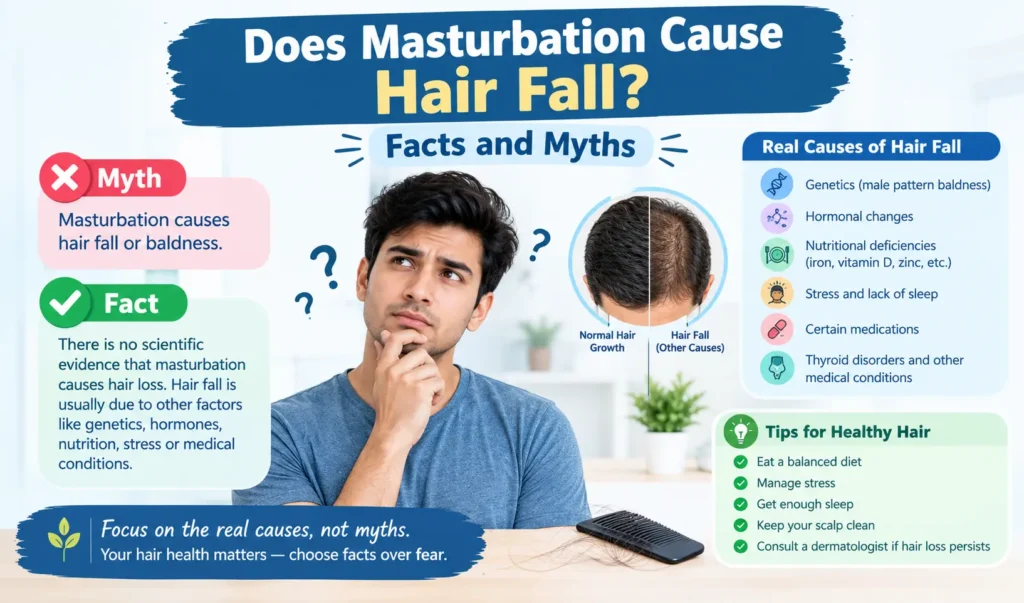
Few health questions are searched as quietly, or believed as strongly, as this one: does masturbation cause hair fall? Many young men and women notice thinning hair and wonder whether their personal habits are to blame. Friends, forums, and old folk beliefs often say yes, which leaves people worried or guilty.
The short answer is no. There is no reliable scientific evidence that masturbation causes hair loss. This article explains where the myth comes from, what research says, and what actually causes hair to thin.
The Quick Answer
Masturbation is a common, normal part of human sexuality, and medical bodies do not list it as a cause of hair loss. Hair fall is driven mainly by genetics, hormones, nutrition, stress, medical conditions, and medications. A sexual habit, on its own, is not on that list.
Why Does This Myth Exist?
Several ideas have kept the myth alive for generations.
Old moral beliefs. For centuries, various cultures and even some early medical writers claimed that sexual activity “drained” the body of strength, energy, or vitality. Hair loss, weakness, and fatigue were all blamed on it. Modern medicine has rejected these ideas, but they still circulate informally.
Confusion about hormones. Hair loss in men is often linked to testosterone and its byproduct, dihydrotestosterone (DHT). Because masturbation is associated with sexual hormones, people assumed it must raise DHT and damage hair follicles. As explained below, the science does not support this.
The protein myth. Some believe that losing semen means losing large amounts of protein, which hair needs to grow. In reality, semen contains only trace amounts of protein and nutrients, far too little to affect your overall nutrition or hair health.
Coincidental timing. Androgenetic alopecia (pattern baldness) often begins in the late teens and twenties, the same years when sexual activity and self-exploration begin. Two things happening at the same age can look like cause and effect when they are not.
What Does Science Say About Hormones?
DHT is a real factor in male pattern baldness. In people who are genetically sensitive, DHT gradually shrinks hair follicles until they produce thinner, shorter hairs and eventually stop growing.
The key point is that the sensitivity is inherited. Your follicles react to normal levels of DHT because of your genes, not because of how often you ejaculate.
Studies on this topic show that ejaculation can cause small, short-lived changes in hormone levels, but these changes return to normal quickly. Research has not shown that regular masturbation produces a lasting rise in testosterone or DHT large enough to cause hair loss. No well-designed study has directly linked masturbation frequency to hair thinning in men or women.
Facts vs. Myths at a Glance
Myth: Masturbation drains nutrients that hair needs.
Fact: The nutrient content of semen is tiny and easily replaced through a normal diet.
Myth: Masturbation raises DHT and causes baldness.
Fact: Any hormonal change is temporary, and pattern baldness depends mainly on genetic sensitivity.
Myth: Only men lose hair from masturbation.
Fact: There is no evidence of hair loss from masturbation in either men or women.
Myth: Stopping masturbation will regrow hair.
Fact: If it is not the cause, stopping will not reverse hair loss.
Can Masturbation Indirectly Affect Hair?
Masturbation itself does not harm hair, but a few indirect situations are worth mentioning. If someone feels intense guilt or shame about the habit, the resulting stress and anxiety can disturb sleep and mood. Chronic stress is a known trigger for a type of temporary shedding called telogen effluvium. In that case, the culprit is the stress and poor sleep, not the act itself.
Similarly, if a behavior becomes compulsive and interferes with sleep, work, relationships, or daily life, it is worth speaking with a doctor or counselor. That would be a matter of mental well-being, not a direct hair issue.
The Real Causes of Hair Fall
If masturbation is not the reason, what is? These are the most common causes.
1. Genetics
Androgenetic alopecia is by far the most common cause of hair loss in both men and women. In men it usually appears as a receding hairline and thinning at the crown. In women it tends to show as a widening part and overall thinning.
2. Stress
Physical or emotional stress, such as illness, surgery, childbirth, or major life changes, can push many hairs into the shedding phase at once. This usually becomes noticeable a few months later.
3. Nutritional Deficiencies
Low iron, vitamin D, zinc, vitamin B12, or protein intake can weaken hair growth. Crash diets and restrictive eating are common triggers.
4. Thyroid and Hormonal Problems
Both underactive and overactive thyroid can cause diffuse hair thinning. In women, conditions such as PCOS, pregnancy, and menopause can also change hair growth.
5. Medications and Treatments
Certain drugs, including some used for blood pressure, depression, acne, and cancer treatment, may cause hair shedding as a side effect.
6. Scalp Conditions
Dandruff, fungal infections, and inflammation can damage hair roots if left untreated.
7. Autoimmune Conditions
Alopecia areata causes sudden, patchy hair loss when the immune system attacks hair follicles.
8. Hair Care Habits
Tight hairstyles, harsh chemical treatments, frequent heat styling, and aggressive brushing can cause breakage and traction-related hair loss.
How to Reduce Hair Fall the Right Way
Instead of blaming personal habits, focus on steps that are proven to help:
- Eat a balanced diet with enough protein, iron, zinc, and vitamins, including eggs, lentils, nuts, leafy greens, and fruit.
- Sleep 7 to 8 hours every night, since poor sleep affects hormones and recovery.
- Manage stress through exercise, meditation, or hobbies.
- Be gentle with your hair. Avoid tight styles, excess heat, and harsh products.
- Keep your scalp clean and treat dandruff early.
- Get tested if needed. Blood tests can reveal iron, vitamin D, B12, or thyroid problems.
- Ask about medical treatment. Options such as minoxidil, and for some people prescription medicines like finasteride, have evidence behind them, but they should be used under a doctor’s guidance.
When Should You See a Doctor?
Losing 50 to 100 hairs a day is normal. Consult a dermatologist if you notice:
- Rapid or sudden hair loss
- Bald patches or a clearly receding hairline
- Hair coming out in clumps
- Scalp itching, redness, pain, or scaling
- Hair loss along with fatigue, weight changes, or irregular periods
Early diagnosis matters because some forms of hair loss respond best when treated soon.
Final Thoughts
Masturbation does not cause hair fall. The belief comes from outdated ideas, hormone confusion, and coincidence, not from scientific evidence. Hair thinning is usually the result of genetics, hormones, nutrition, stress, or health conditions, and those are the areas worth your attention.
If you are worried about your hair, skip the guilt and look for the real cause. A dermatologist can examine your scalp, order simple tests, and recommend a treatment plan that actually works. Accurate information is the first step to healthier hair and a healthier mind.
Disclaimer: This article is for general information only and is not a substitute for professional medical advice, diagnosis, or treatment. Consult a qualified healthcare provider about your symptoms.