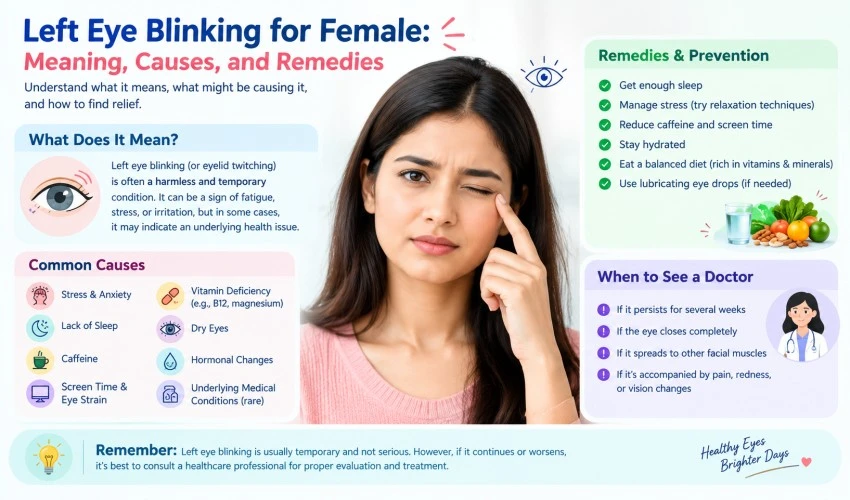
Have you ever felt your left eyelid flutter for no reason, and wondered if it meant something? Eye blinking or twitching is something almost every woman experiences at some point. Some people see it as a sign of good or bad luck, while doctors see it as a common, harmless response to everyday lifestyle factors.
This article covers both sides: what a twitching left eye is believed to mean in traditional beliefs, what actually causes it, how to stop it, and when it is worth getting checked.
What Is Eye Blinking or Twitching?
Normal blinking is a natural reflex that keeps your eyes moist and clean. What most people describe as “eye blinking” in this context is actually eyelid twitching, medically called myokymia. It is a small, involuntary spasm of the muscle in the upper or lower eyelid. You may feel a faint pulsing or fluttering, and others usually cannot see it.
Twitching typically affects one eye, comes and goes, and lasts from a few seconds to a few minutes. Sometimes it returns on and off for several days before disappearing on its own.
Left Eye Blinking for Female: Meaning in Traditional Beliefs
Across many cultures, especially in India, people have long attached meaning to which eye twitches. According to a popular belief rooted in Samudrika Shastra, the traditional Indian study of body signs, the meaning depends on gender:
- For women, a twitching left eye is considered a good omen. It is thought to signal good news, success, happiness, or the fulfillment of a wish.
- For women, a twitching right eye is traditionally seen as a sign of caution or upcoming difficulty.
- For men, the interpretation is believed to be the opposite.
Some traditions go further and link the timing to specific outcomes, such as meeting a loved one, receiving money, or hearing welcome news.
It is important to treat these as cultural beliefs, not facts. There is no scientific evidence that eye twitching predicts future events. Still, many people enjoy these traditions as a harmless, hopeful way to read small everyday signs.
Medical Causes of Left Eye Blinking in Women
From a health point of view, a twitching left eye usually points to a temporary trigger. Here are the most common ones.
1. Stress and Anxiety
Stress is one of the leading causes of eyelid twitching. When you are under pressure, your body releases stress hormones that can make small muscles, including those around the eyes, misfire. Women juggling work, family, and personal responsibilities often notice twitching during busy or emotional periods.
2. Lack of Sleep and Fatigue
Tired eyes twitch more. Poor or interrupted sleep, late nights, and long working hours tire the eyelid muscles and nerves, making spasms more likely.
3. Digital Eye Strain
Hours spent on phones, laptops, and TVs reduce how often you blink and force your eyes to focus continuously. This strain is a very common reason for twitching today, particularly in people who work on screens all day.
4. Too Much Caffeine or Alcohol
Tea, coffee, energy drinks, and alcohol can overstimulate the nervous system. Cutting back often reduces twitching within days.
5. Dry Eyes
Dry eyes are common in women, especially after age 40 or during hormonal changes such as menopause. Contact lens use, air conditioning, and dusty environments make dryness worse, and the eyelid may twitch as the eye tries to compensate.
6. Allergies
Allergies cause itching, rubbing, and histamine release around the eyes. Rubbing the eye can irritate the eyelid muscle and trigger twitching.
7. Nutritional Deficiencies
Low levels of magnesium, potassium, or vitamin B12 may contribute to muscle twitching in some people. A balanced diet usually prevents this, though a doctor can check your levels if twitching is frequent.
8. Hormonal Changes
Fluctuations during menstrual cycles, pregnancy, and menopause can affect fluid balance and nerve sensitivity, which may make eyelid twitching more noticeable at certain times.
9. Medications
Some medicines, including certain drugs for epilepsy, psychosis, and allergies, may list muscle twitching as a side effect. Do not stop any medicine without speaking to your doctor.
Home Remedies to Stop Left Eye Twitching
Most twitching settles on its own, but these simple steps can speed things up:
- Get enough sleep. Aim for 7 to 8 hours every night.
- Rest your eyes. Follow the 20-20-20 rule: every 20 minutes, look at something 20 feet away for 20 seconds.
- Apply a warm compress. Place a clean, warm, damp cloth over the closed eye for 5 to 10 minutes to relax the muscle.
- Use lubricating eye drops. Preservative-free artificial tears help if your eyes feel dry or tired.
- Reduce caffeine and alcohol. Cut down gradually and see if the twitching improves.
- Manage stress. Deep breathing, light yoga, meditation, or a short walk can calm your nervous system.
- Eat well and stay hydrated. Include magnesium-rich foods like bananas, nuts, leafy greens, and whole grains, and drink enough water.
- Avoid rubbing your eyes. It can worsen irritation and spread allergens.
- Treat allergies. Keep your surroundings clean and talk to a doctor about suitable antihistamines if needed.
When to See a Doctor
Occasional twitching is nothing to worry about. However, see an eye doctor or physician if:
- Twitching lasts more than two to three weeks
- The eyelid closes completely during a spasm
- The twitching spreads to other parts of your face
- You notice redness, swelling, or discharge from the eye
- The upper eyelid droops
- Your vision changes or you have eye pain
- Twitching started after a head or eye injury
Persistent, forceful spasms can sometimes be linked to conditions such as blepharospasm or hemifacial spasm, which are treatable with proper medical care. A doctor can examine your eyes, review your lifestyle and medications, and suggest the right treatment.
How to Prevent Eye Twitching
Prevention mostly comes down to healthy habits. Take regular breaks from screens, keep a consistent sleep schedule, limit caffeine, protect your eyes from wind and dust, and have your vision checked regularly. If you wear glasses or contact lenses, make sure your prescription is up to date, as uncorrected vision strains the eyes and can lead to twitching.
Final Thoughts
A blinking left eye in a woman may carry a hopeful meaning in tradition, but in most cases the real explanation is simple: stress, tiredness, screen time, or too much caffeine. The good news is that this twitching is usually harmless and goes away with rest, hydration, and healthy routines.
Enjoy the cultural belief if it brings you a smile, but listen to your body too. If the twitching lingers or comes with other symptoms, do not ignore it. A quick visit to a doctor can bring peace of mind and, if needed, early treatment.
Disclaimer: This article is for general information only and is not a substitute for professional medical advice, diagnosis, or treatment. Cultural beliefs mentioned are traditional and not scientifically proven.