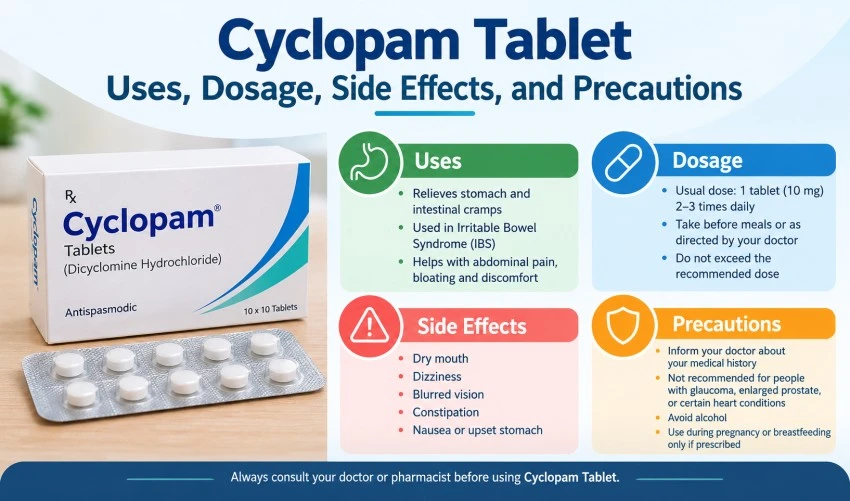
Stomach cramps can stop you in your tracks. One common prescription for them in India is Cyclopam, a combination tablet that eases painful gut spasms and also lowers pain and fever. This article explains what it contains, what it treats, how it is usually taken, and what to watch for.
What Is Cyclopam Tablet?
Each Cyclopam tablet contains Dicyclomine Hydrochloride 20 mg and Paracetamol 500 mg. The two ingredients do different jobs:
- Dicyclomine is an antispasmodic. It helps reduce sudden contractions in the stomach and intestines.
- Paracetamol (acetaminophen) is a painkiller and fever reducer. It helps lower pain signals.
Together they tackle cramping from two directions: one relaxes the gut muscle, the other dulls the pain.
How Does It Work?
Dicyclomine blocks acetylcholine, a chemical messenger that tells the smooth muscle of the digestive tract to contract. With less of that signal, spasms settle and cramping eases. Paracetamol works mainly in the brain and spinal cord, raising the pain threshold and lowering raised body temperature. It is thought to act by blocking an enzyme involved in making prostaglandins. Because the two drugs act differently, the combination often gives faster, fuller relief than either alone.
Common Uses
Doctors usually prescribe Cyclopam for short-term relief of pain linked to muscle spasm, including:
- Abdominal cramps and colicky stomach pain. It is prescribed to relieve painful muscle spasms and cramps in the stomach and intestines.
- Painful periods. It is used for spasmodic pain, cramps and painful menstruation
- Irritable bowel syndrome (IBS) symptoms such as cramping and bloating, where spasm plays a part.
- Pain with fever, because paracetamol also brings temperature down.
It treats symptoms, not causes. If your pain keeps returning, the underlying problem needs to be found.
Dosage and How to Take It
The right dose depends on your age, symptoms, liver and kidney health, and other medicines you take. Dosage for adults should be personalised by a healthcare professional. Cyclopam is generally taken by mouth as a whole tablet with water, and it may be taken with or without food. Taking it after a light meal can help if your stomach is sensitive.
Some practical points:
- Follow the schedule on your prescription or the pack. Don’t take extra tablets because the pain is strong.
- Use it for the shortest time needed. It is meant for short-term relief, not daily long-term use.
- Count your paracetamol. The total from all sources must stay within safe daily limits. Many cold, flu and fever remedies also contain paracetamol, and doubling up is how accidental overdoses happen. Avoid other medications that contain paracetamol to prevent an accidental overdose.
- Missed dose: take it as soon as you remember. If it is nearly time for the next dose, skip the missed one. Never double up.
Children: Cyclopam Tablet is not recommended for children below 12 years of age. Child doses of paracetamol depend on weight, so always consult a paediatrician. Cyclopam also comes in liquid forms for younger patients, and these should be dosed only on a doctor’s advice.
Side Effects
Most people tolerate Cyclopam well, and most side effects don’t need medical attention and fade as your body adjusts. The usual ones come from dicyclomine’s drying, anticholinergic action:
- Dry mouth
- Dizziness or light-headedness
- Nausea
- Blurred vision
- Constipation
- Drowsiness or weakness
- Nervousness
Some people also report flatulence, diarrhoea, and skin reactions such as rashes and hives.
Stop the medicine and get medical help urgently if you notice:
- Swelling of the face, lips or throat, or difficulty breathing (allergic reaction)
- Severe skin rash, blistering or peeling
- Fast or irregular heartbeat
- Confusion, hallucinations or severe agitation
- Inability to pass urine
- Yellowing of the skin or eyes, dark urine or severe upper-right abdominal pain (possible liver trouble)
- Severe or bloody diarrhoea, or a swollen, hard abdomen
Who Should Avoid It or Take Extra Care
Tell your doctor about your full medical history before starting. Caution or avoidance applies if you have:
- An allergy to dicyclomine, paracetamol or any ingredient in the tablet.
- Glaucoma (especially angle-closure). Dicyclomine can raise eye pressure.
- Urinary retention or an enlarged prostate. It can make passing urine harder.
- Severe constipation, intestinal blockage, or serious ulcerative colitis. Slowing the gut further can be dangerous.
- Liver disease or heavy alcohol use. Paracetamol is processed by the liver, so dosing may need adjusting or the drug may need to be avoided. Liver function tests may be advised for prolonged use.
- Kidney problems, heart rhythm disorders, an overactive thyroid, or myasthenia gravis. These need a doctor’s review.
Older adults are more sensitive to the effects, so Cyclopam should be used with caution in older people. Dicyclomine can cause confusion and dizziness, raising fall risk.
Pregnancy and Breastfeeding
Sources differ on pregnancy. One notes it can be used if the benefit outweighs the potential risk to the foetus, while another says safety during pregnancy has not been established. Since the evidence isn’t conclusive, take it during pregnancy only if your doctor specifically advises it. For breastfeeding, the components pass into breast milk, so check with your doctor before using it.
Alcohol and Drug Interactions
Alcohol: Avoid alcohol, as it may increase drowsiness and stomach-related side effects. Alcohol combined with paracetamol also strains the liver.
Other medicines: Tell your doctor or pharmacist about everything you take, including herbal products. Side effects may increase with quinidine (for irregular heartbeats), phenothiazines (anti-allergy and antipsychotic medicines) and meperidine (a pain medicine). Other anticholinergic drugs, such as some antihistamines, antidepressants and bladder medicines, can add to dry mouth, constipation and confusion. Antacids may reduce dicyclomine absorption, so space them apart as advised.
Driving and Daily Life
The tablet may make you dizzy and sleepy, so avoid driving or operating machinery until you know how it affects you. Drink enough water, since dry mouth and constipation are common.
Overdose
Taking too much can be serious. Excess paracetamol can cause silent but severe liver damage, and early symptoms may seem mild. Too much dicyclomine can cause a flushed face, very dry mouth, a rapid pulse, widened pupils, agitation and difficulty breathing. If you suspect an overdose, seek emergency medical care immediately, even if you feel fine.
Storage
Keep the tablets in a cool, dry place away from direct sunlight and out of children’s reach. Check the expiry date and don’t use tablets past it.
When to See a Doctor
Cyclopam is for relief, not diagnosis. See a doctor promptly if your pain is severe or lasts more than a couple of days, or if it comes with persistent vomiting, blood in the stool, high fever, unexplained weight loss, or a rigid abdomen. These can point to conditions such as appendicitis, infection or obstruction that need proper treatment, and masking the pain could delay care.
Final Thoughts
Cyclopam combines an antispasmodic with a painkiller to give quick relief from cramps and spasm-related pain. Used correctly for a short period, it is effective and generally well tolerated. Respect the paracetamol limit, avoid alcohol, and take extra care if you have eye, urinary, liver or bowel conditions or are pregnant, elderly or giving it to a child.
This article is for general information and isn’t a substitute for professional medical advice. Always follow your doctor’s or pharmacist’s instructions.
