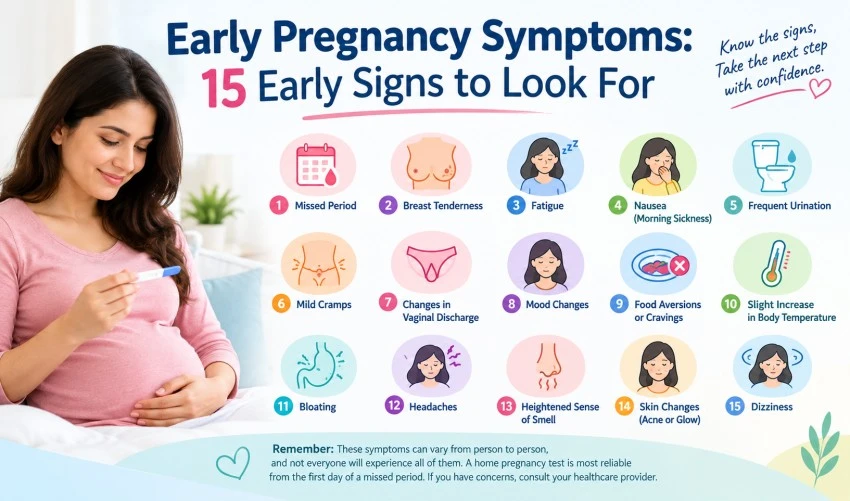
Few moments feel as uncertain as the days after a possible conception. Your body may already be changing, but those changes can be subtle, and many look just like a period about to start. Every pregnancy is different. Some women notice symptoms within a week or two of conception, while others feel nothing until well into the second month. This guide covers 15 of the most common early signs, when they tend to appear, and what to do next.
1. A Missed Period
A missed period is usually the first sign that prompts a pregnancy test. If your cycles are regular and your period is more than a few days late, pregnancy becomes a real possibility. Stress, illness, travel, weight changes, and conditions like PCOS can also delay a period, so a missed period alone doesn’t confirm anything.
2. Light Spotting (Implantation Bleeding)
About 6 to 12 days after conception, the fertilized egg attaches to the uterine lining. Some women notice light pink or brown spotting at this point. It is usually much lighter and shorter than a period, lasting from a few hours to a couple of days. Not everyone experiences it, and its absence means nothing either way.
3. Mild Cramping
Light cramps or a pulling sensation in the lower abdomen can occur as the uterus begins to adjust. These are often mistaken for premenstrual cramps. They should be mild. Severe, one-sided, or worsening pain needs prompt medical attention.
4. Tender, Swollen Breasts
Rising levels of the hormones estrogen and progesterone can make your breasts feel sore, heavy, or tingly. They may look fuller, and the veins can become more visible. The areolas may darken. This can feel similar to premenstrual tenderness, but it tends to persist and sometimes feels more intense.
5. Fatigue
Feeling exhausted despite a full night’s sleep is one of the earliest and most common signs. Progesterone rises sharply in early pregnancy and has a sedating effect. Your body is also producing more blood and working hard to support the developing embryo. Many women describe a bone-deep tiredness that arrives suddenly.
6. Nausea With or Without Vomiting
Often called morning sickness, nausea can strike at any time of day. It commonly begins around the sixth week, though some women feel queasy earlier. Rising levels of the pregnancy hormone hCG are thought to play a role. Some women only feel mildly queasy, while others vomit frequently. Seek medical help if you can’t keep any food or fluids down.
7. Frequent Urination
Needing the bathroom more often, especially at night, can begin within the first few weeks. Blood volume increases and the kidneys work harder, while hormonal changes also affect the bladder. Later in pregnancy, the growing uterus adds pressure. Burning or pain while urinating isn’t a normal pregnancy symptom and may signal a urinary tract infection.
8. Food Aversions and Cravings
Suddenly disliking foods you normally enjoy, or craving unusual combinations, is common. Coffee, meat, and strongly flavored foods are frequent offenders. Cravings and aversions are linked to hormonal shifts and a heightened sense of taste and smell.
9. Heightened Sense of Smell
Many women find everyday odors, such as cooking, perfume, or cleaning products, unbearably strong. This sensitivity often goes hand in hand with nausea and can trigger it. Some describe it as having a “superpower” they didn’t ask for.
10. A Metallic Taste in the Mouth
An odd metallic or sour taste, sometimes called dysgeusia, is a lesser-known early sign. Hormonal changes affect taste buds and saliva. It usually fades by the second trimester.
11. Bloating and Gas
Progesterone slows digestion by relaxing smooth muscle, which can leave you feeling bloated, gassy, and full. Your waistband may feel tight even though your uterus is still tiny. This resembles premenstrual bloating, which is one reason it’s easy to overlook.
12. Constipation
The same slowed digestion that causes bloating can lead to constipation. Drinking plenty of water, eating fiber-rich foods, and staying gently active can help. Check with your doctor or pharmacist before using laxatives or supplements during pregnancy.
13. Mood Swings
Hormonal surges can make you feel weepy, irritable, anxious, or unusually emotional. You may cry at a TV commercial or feel overwhelmed by small things. This is normal and usually settles somewhat as your body adjusts, though it can return later. If low mood is persistent or severe, talk to a healthcare provider.
14. Headaches and Dizziness
Changing hormone levels and increased blood volume can trigger headaches. Blood vessels widen and blood pressure may drop slightly, which can cause light-headedness, especially when standing up quickly. Low blood sugar from skipped meals can add to it. Eating regularly and staying hydrated often helps. Sudden, severe headaches or vision changes need prompt medical review.
15. Elevated Basal Body Temperature
If you track your basal body temperature, you may notice it stays elevated for more than two weeks after ovulation. In a typical cycle, it drops just before your period. A sustained high temperature can be an early clue, though it isn’t definitive on its own.
When Should You Take a Pregnancy Test?
Home urine tests detect hCG, which rises after implantation. For the most reliable result, wait until the first day of your missed period. Testing earlier can give a false negative because hCG may not yet be high enough to detect. Using first-morning urine, which is more concentrated, improves accuracy. If a test is negative but your period still hasn’t arrived, repeat it after a few days. A positive result should be confirmed with a healthcare provider, who can arrange blood tests or an ultrasound.
What to Do If You Think You’re Pregnant
Once you suspect or confirm a pregnancy, a few steps matter early on:
- Start folic acid. Doctors commonly recommend a daily folic acid supplement before and during early pregnancy to help prevent neural tube defects. Ask your provider about the right dose for you.
- Book a prenatal appointment. Early care helps monitor your health and the baby’s development.
- Avoid alcohol, smoking, and recreational drugs.
- Check your medications. Don’t stop prescribed medicines on your own, but do ask your doctor whether they are safe during pregnancy.
- Eat well and rest. Small, frequent meals can ease nausea.
Warning Signs That Need Urgent Care
Contact a doctor or go to emergency care if you experience:
- Severe or one-sided abdominal pain
- Heavy vaginal bleeding or passing clots
- Dizziness or fainting with shoulder-tip pain (which can signal an ectopic pregnancy)
- Persistent vomiting with inability to keep fluids down
- Fever, or pain and burning with urination
Final Thoughts
Early pregnancy symptoms vary widely. You may have many of the signs above, or only one or two. Many of them overlap with premenstrual symptoms, which is why testing is the only reliable way to know. Pay attention to your body, be gentle with yourself, and reach out to a healthcare professional as soon as you have a positive test or any concerns.
This article is for general information only and isn’t a substitute for professional medical advice.