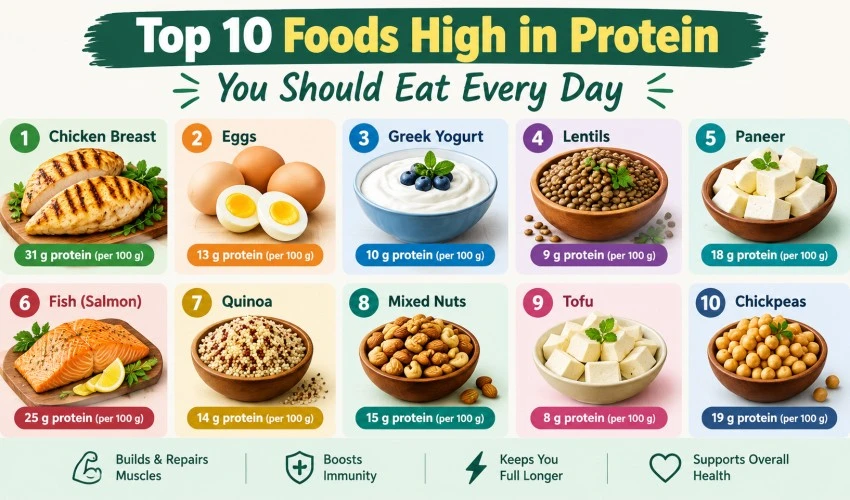
Protein is one of the most important nutrients your body needs. It builds and repairs muscle, supports immune function, helps produce enzymes and hormones, and keeps you feeling full between meals. Yet many people fall short of getting enough, especially when meals revolve around refined carbohydrates.
The good news is that you don’t need expensive supplements to meet your needs. Plenty of everyday foods are rich in high-quality protein. Below are ten excellent options, with practical ways to enjoy them daily.
How Much Protein Do You Need?
The general recommended dietary allowance for healthy adults is about 0.8 grams of protein per kilogram of body weight per day. That works out to roughly 56 grams for a 70 kg person. Needs are often higher for athletes, older adults, pregnant or breastfeeding women, and people recovering from illness. Spreading protein across meals, rather than eating most of it at dinner, is generally a good strategy.
If you have kidney disease or any medical condition, check with your doctor before increasing your protein intake significantly.
1. Eggs
Eggs are one of the most complete and affordable protein sources. One large egg provides about 6 grams of protein, along with vitamin B12, choline, and healthy fats. The protein in eggs is highly digestible and contains all essential amino acids.
How to enjoy them: Boil a batch at the start of the week for quick snacks, scramble them with vegetables for breakfast, or add one to a bowl of rice or noodles.
2. Chicken Breast
Skinless chicken breast is a classic lean protein. A 100-gram cooked portion delivers around 30 grams of protein with very little fat, making it popular for muscle building and weight management.
How to enjoy it: Grill, bake, or stir-fry it. Marinating with yogurt and spices keeps it juicy. Shredded chicken works well in wraps, salads, and soups.
3. Greek Yogurt
Strained to remove excess whey, Greek yogurt is thicker and higher in protein than regular yogurt. A typical 170-gram serving of plain Greek yogurt provides about 15 to 17 grams of protein. It also contains calcium and probiotics that support bone and gut health.
How to enjoy it: Top it with fruit and nuts, blend it into smoothies, or use it as a substitute for sour cream in dips and dressings. Choose plain varieties to avoid added sugar.
4. Lentils
Lentils are a standout plant-based protein. One cooked cup provides roughly 18 grams of protein, plus plenty of fiber, iron, and folate. Their fiber helps with digestion and steady blood sugar levels.
How to enjoy them: Cook them into dal, soups, or stews, or toss cooled lentils into salads. They cook faster than most legumes and don’t need soaking.
5. Paneer and Cottage Cheese
Fresh cheeses are excellent protein sources, especially for vegetarians. Cottage cheese offers about 11 to 14 grams of protein per 100 grams, and paneer provides a similar amount, though paneer is usually higher in fat.
How to enjoy them: Add paneer cubes to curries and wraps, or grill them as a snack. Enjoy cottage cheese with fruit, on toast, or blended into dips.
6. Fish and Salmon
Fish provides high-quality protein along with omega-3 fatty acids, which support heart and brain health. A 100-gram portion of cooked salmon offers around 22 to 25 grams of protein. Tuna, sardines, and mackerel are also great choices.
How to enjoy it: Bake or pan-sear fish with lemon and herbs. Canned tuna or sardines are convenient, budget-friendly options for sandwiches and salads. Aim for fish about twice a week, and be mindful of mercury levels in larger species if you are pregnant.
7. Chickpeas
Chickpeas are versatile, filling, and affordable. One cooked cup contains about 14 grams of protein, along with fiber, magnesium, and iron.
How to enjoy them: Make chana masala, roast them for a crunchy snack, blend them into hummus, or add them to salads and grain bowls.
8. Almonds and Other Nuts
Nuts provide protein alongside healthy unsaturated fats and vitamin E. A 30-gram handful of almonds contains about 6 grams of protein. Peanuts, which are technically legumes, offer even more, at roughly 7 grams per 30 grams.
How to enjoy them: Keep a small handful as a snack, sprinkle chopped nuts over oatmeal or yogurt, or spread natural nut butter on whole-grain toast. Because nuts are calorie-dense, portion size matters.
9. Tofu and Tempeh
Made from soybeans, tofu and tempeh are staples for plant-based eaters. Soy is one of the few plant foods containing all essential amino acids. Firm tofu provides about 10 to 15 grams of protein per 100 grams, while tempeh offers closer to 19 grams, plus the benefits of fermentation.
How to enjoy them: Crumble tofu into scrambles, cube and stir-fry it with vegetables, or marinate and bake tempeh for sandwiches and bowls.
10. Lean Beef or Turkey
Lean cuts of beef and turkey are rich in protein, iron, zinc, and vitamin B12. A 100-gram cooked portion of lean beef or turkey typically provides 25 to 30 grams of protein.
How to enjoy them: Choose lean cuts, trim visible fat, and use cooking methods like grilling or baking rather than deep frying. Health authorities generally advise limiting processed and red meat, so enjoy them in moderation and balance them with fish, legumes, and plant proteins.
Quick Protein Comparison
| Food | Approximate Serving | Protein |
|---|---|---|
| Chicken breast | 100 g cooked | 30 g |
| Salmon | 100 g cooked | 22–25 g |
| Tempeh | 100 g | 19 g |
| Lentils | 1 cup cooked | 18 g |
| Greek yogurt | 170 g | 15–17 g |
| Chickpeas | 1 cup cooked | 14 g |
| Cottage cheese | 100 g | 11–14 g |
| Tofu (firm) | 100 g | 10–15 g |
| Almonds | 30 g | 6 g |
| Egg | 1 large | 6 g |
Values are approximate and vary by brand and preparation.
Simple Tips to Eat More Protein Daily
Start with breakfast. Many people eat mostly carbohydrates in the morning. Eggs, Greek yogurt, or a tofu scramble can set you up for steady energy and fewer cravings.
Include protein in every meal. Aim for a palm-sized portion of a protein food at lunch and dinner, and add protein-rich snacks such as nuts, roasted chickpeas, or cottage cheese.
Mix plant and animal sources. Variety helps you get a broader range of nutrients. If you eat mostly plant foods, combining legumes, grains, nuts, and soy over the course of the day ensures you get all essential amino acids.
Plan ahead. Batch-cook lentils, boil eggs, or marinate chicken on the weekend so healthy choices are ready when you’re busy.
Read labels. Packaged “high-protein” snacks can be loaded with sugar and additives. Whole foods usually offer better nutrition for the money.
The Bottom Line
Eating enough protein doesn’t require complicated meal plans or supplements. Eggs, chicken, Greek yogurt, lentils, paneer, fish, chickpeas, nuts, tofu, and lean meats can all help you meet your daily needs while providing other valuable nutrients.
Choose a mix of foods that fit your preferences, culture, and budget, and spread them throughout the day. If you have specific health conditions, are pregnant, or follow a strict training program, a registered dietitian can help you determine the right amount of protein for you.