Almost everyone has felt a dull ache, sharp stab, or cramping sensation below the belly button at some point. Lower abdominal pain is one of the most common reasons people visit a doctor, and its causes range from harmless gas to emergencies that need immediate care.
The lower abdomen holds part of the intestines, the bladder, and, depending on your anatomy, reproductive organs such as the uterus, ovaries, and prostate. A problem in any of these can produce pain in the same general area, which makes it hard to work out the cause on your own. Understanding the most common culprits can help you decide whether to rest at home or seek medical help.
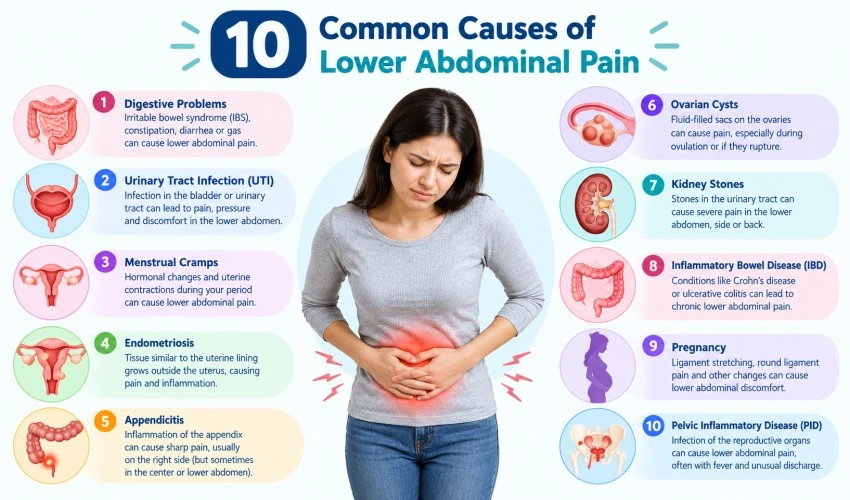
1. Gas and Indigestion
Trapped gas is one of the most frequent and least serious causes. It builds up when you swallow air, eat quickly, or consume foods like beans, onions, carbonated drinks, or cruciferous vegetables. The pain can feel sharp or crampy and often moves around the abdomen. It usually eases after passing gas or a bowel movement. Eating slowly, limiting trigger foods, and staying active often help.
2. Constipation
When stools are hard, infrequent, or difficult to pass, the colon stretches and cramps, causing a heavy or aching pain, often on the lower left side. Low fiber intake, dehydration, inactivity, certain medications, and ignoring the urge to go are common reasons. Drinking more water, eating fiber-rich foods like oats, fruit, and vegetables, and exercising regularly usually relieve it. If constipation lasts several weeks, see a doctor.
3. Irritable Bowel Syndrome (IBS)
IBS is a long-term disorder of how the gut functions. It causes recurring cramps, bloating, and changes in bowel habits, either diarrhea, constipation, or both alternating. Stress, certain foods, and hormonal changes can trigger flare-ups. IBS does not damage the intestines, but it can seriously affect quality of life. Management typically involves diet adjustments, stress reduction, and sometimes medication. A doctor can rule out other conditions first.
4. Menstrual Cramps
For many women, lower abdominal pain is tied to the menstrual cycle. Cramps happen when the uterus contracts to shed its lining, and they are often felt just before or during a period. Mild to moderate cramps are common and typically improve with heat, gentle exercise, and over-the-counter pain relievers. Pain that is severe, disrupts daily life, or gets worse over time deserves evaluation, since it can signal conditions like endometriosis or fibroids.
5. Urinary Tract Infection (UTI)
A UTI occurs when bacteria infect part of the urinary system, most often the bladder. Besides pain or pressure low in the abdomen, symptoms include a burning feeling when urinating, a frequent urge to go, cloudy or strong-smelling urine, and sometimes blood in the urine. UTIs are more common in women but can affect anyone. They need treatment, usually with antibiotics, because an untreated infection can spread to the kidneys. Fever, back pain, or vomiting alongside these symptoms warrants prompt care.
6. Kidney Stones
Kidney stones are hard mineral deposits that form in the kidneys. Small ones often pass unnoticed, but larger stones can block the ureter, the tube carrying urine to the bladder, and cause intense, wave-like pain. The pain often starts in the back or side and travels toward the lower abdomen and groin. Other signs include nausea, blood in the urine, and a constant urge to urinate. Drinking plenty of fluids helps small stones pass, but severe pain, fever, or inability to urinate requires urgent medical attention.
7. Appendicitis
Appendicitis is inflammation of the appendix, a small pouch attached to the large intestine. The classic pattern begins with pain near the navel that shifts to the lower right abdomen and becomes sharper over hours. Loss of appetite, nausea, vomiting, and low-grade fever often accompany it. The pain tends to worsen with movement, coughing, or pressure. Appendicitis is a medical emergency, since a ruptured appendix can cause a dangerous infection. Do not wait it out if these symptoms appear.
8. Ovarian Cysts
Ovarian cysts are fluid-filled sacs that develop on or inside an ovary. Many are harmless and disappear without treatment, causing no symptoms at all. Larger cysts can cause a dull ache, pressure, or bloating on one side of the lower abdomen. If a cyst ruptures or twists the ovary, the pain can be sudden and severe, sometimes with nausea or fainting, and needs emergency care. Regular check-ups and imaging help doctors monitor cysts.
9. Pelvic Inflammatory Disease (PID)
PID is an infection of the female reproductive organs, usually caused by bacteria spreading from the vagina to the uterus, fallopian tubes, or ovaries. It is often linked to sexually transmitted infections. Symptoms include lower abdominal pain, unusual vaginal discharge, pain during intercourse, irregular bleeding, and fever. Early treatment with antibiotics is important, because untreated PID can lead to chronic pelvic pain and fertility problems.
10. Hernia
A hernia occurs when an organ or fatty tissue pushes through a weak spot in the abdominal muscles. An inguinal hernia, in the groin area, is the type most often linked to lower abdominal pain. You may notice a bulge that becomes more visible when you cough, lift something heavy, or stand for a long time, along with aching or a pulling sensation. Hernias do not heal on their own and usually need surgical repair. Sudden severe pain, a hard bulge that cannot be pushed back, or vomiting may signal a trapped hernia, which is an emergency.
When Should You See a Doctor?
Mild pain from gas or cramps often passes within a day or two. However, seek medical care promptly if you experience:
- Severe or sudden pain that doesn’t ease
- Pain with high fever, persistent vomiting, or chills
- Blood in your stool or urine
- Abdominal swelling or a rigid, hard belly
- Pain during pregnancy or a possible pregnancy
- Pain that lasts more than a few days or keeps returning
- Unexplained weight loss or ongoing changes in bowel habits
Call emergency services if the pain is intense, comes with fainting, or follows an injury to the abdomen.
Tips for Managing Mild Lower Abdominal Pain at Home
If your symptoms are mild and you have no warning signs, a few simple steps may help. Apply a warm compress or heating pad to the area, drink plenty of water, and eat light, easily digestible foods. Avoid heavy, greasy, or spicy meals until you feel better. Over-the-counter pain relievers may help in some cases, but check with a pharmacist or doctor first, especially if you have kidney, liver, or stomach conditions. Keeping a short diary of when the pain occurs, what you ate, and any other symptoms can also give your doctor valuable clues.
Final Thoughts
Lower abdominal pain is a symptom, not a diagnosis. The ten causes above, from everyday gas and constipation to conditions like appendicitis, kidney stones, and PID, show how varied the possible explanations are. Paying attention to the location, timing, intensity, and accompanying symptoms of your pain makes it easier to recognize when something more serious is going on.
Trust your instincts. If the pain feels unusual, severe, or persistent, getting it checked is always the safer choice. Early diagnosis often means simpler treatment and a quicker recovery.
Disclaimer: This article is for general information only and is not a substitute for professional medical advice, diagnosis, or treatment. Always consult a qualified healthcare provider about your symptoms.