Erectile dysfunction (ED) is the ongoing difficulty getting or keeping an erection firm enough for satisfying sex. It is far more common than most men admit, and the risk rises with age. Yet many men stay silent out of embarrassment, even though ED is often treatable and can be an early warning of other health problems.
Knowing the signs helps you recognize the problem early and seek the right care. Here are ten symptoms and what they may mean.
What Is Erectile Dysfunction?
An erection depends on a coordinated effort between the brain, nerves, hormones, blood vessels, and muscles. When sexual arousal occurs, blood flow to the penis increases and the tissue expands. If any part of this chain is disrupted, erections can become weak or unreliable.
Occasional trouble is normal and usually linked to stress, tiredness, or alcohol. ED is diagnosed when problems happen repeatedly, generally for three months or longer.
10 Common Symptoms of Erectile Dysfunction
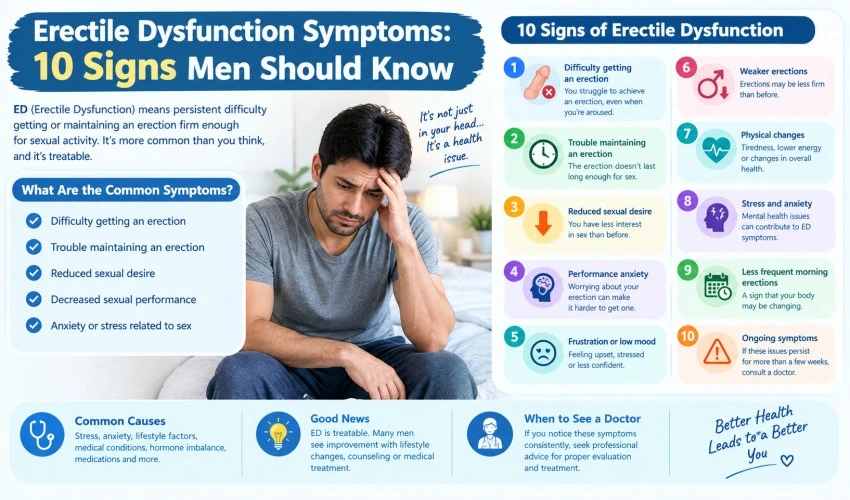
1. Trouble Getting an Erection
The most recognizable sign is difficulty achieving an erection even when you feel aroused and are in a suitable setting. It may happen with a partner, alone, or both.
2. Difficulty Keeping an Erection
Some men get an erection but lose it before or during intercourse. If this happens often, it may point to issues with blood flow or nerve signals rather than a lack of desire.
3. Reduced Firmness
An erection that is present but not hard enough for penetration is also a symptom. Men often describe it as “semi-firm” or “not as strong as before.”
4. Fewer Morning Erections
Most healthy men have erections during sleep and often wake with one. A clear drop in nighttime or morning erections can suggest a physical cause, since these erections do not depend on psychological factors.
5. Reduced Sexual Desire
A lower interest in sex may accompany ED. It can be tied to low testosterone, depression, relationship problems, or side effects of medication. Not all men with ED lose desire, but many notice a decline.
6. Inconsistent Performance
Erections that work well one day and fail the next can signal early ED. Unpredictability is common in the beginning, before the problem becomes constant.
7. Need for Extra Stimulation
If you now need much more physical or visual stimulation than you used to in order to get an erection, this may be a sign that blood flow or nerve response is changing.
8. Performance Anxiety
Worry about whether you will perform can itself become a symptom and a cause. A single failure may trigger fear, which makes the next attempt harder and creates a cycle.
9. Avoiding Intimacy
Men with ED often begin avoiding sex, physical closeness, or conversations about it. Withdrawal, irritability, or making excuses can strain relationships and may be a hidden sign of the condition.
10. Emotional Effects
Low self-confidence, frustration, shame, stress, and sadness often accompany ED. These feelings are not just reactions. They can worsen the problem if left unaddressed.
Common Causes of Erectile Dysfunction
ED rarely has a single cause. Physical, psychological, and lifestyle factors often overlap.
Physical causes
- Heart disease and narrowed or hardened arteries
- High blood pressure
- Diabetes
- Obesity and metabolic syndrome
- Low testosterone or other hormonal problems
- Nerve damage from surgery, injury, or conditions such as multiple sclerosis
- Prostate problems and certain pelvic surgeries
- Sleep disorders, including sleep apnea
- Peyronie’s disease, a condition causing penile curvature
Psychological causes
- Stress and anxiety
- Depression
- Relationship conflict
- Past sexual trauma or guilt
Lifestyle factors
- Smoking
- Heavy alcohol use
- Drug misuse
- Lack of exercise
- Poor diet
Medications
Some drugs for high blood pressure, depression, anxiety, and prostate conditions may contribute. Never stop a prescribed medicine without medical advice.
Why ED Can Be an Early Warning Sign
The blood vessels in the penis are very small, so they can show damage before larger vessels do. For this reason, ED can appear years before a heart attack or stroke in some men. Diabetes and high blood pressure may also first come to light through erectile problems. This is one of the strongest reasons not to ignore symptoms or treat them only as a private inconvenience.
When to See a Doctor
Book an appointment if:
- Symptoms last longer than a few weeks to three months
- ED appeared suddenly
- You have chest pain, shortness of breath, or numbness along with symptoms
- You have diabetes, heart disease, or high blood pressure
- You have recently started a new medicine
- The problem is affecting your mood or relationship
A doctor will review your medical history, perform a physical exam, and may order blood tests for blood sugar, cholesterol, and testosterone. Sometimes further tests are used to check blood flow or nerve function.
Treatment Options
The good news is that ED is highly treatable, and most men improve with the right approach.
- Lifestyle changes: Quitting smoking, losing excess weight, exercising regularly, eating a heart-healthy diet, limiting alcohol, and sleeping well.
- Oral medications: Prescription drugs such as sildenafil and tadalafil improve blood flow. They must only be used under medical supervision, especially if you take nitrates or have heart conditions.
- Treating underlying conditions: Managing diabetes, blood pressure, or low testosterone often improves erections.
- Counseling or sex therapy: Helpful when stress, anxiety, or relationship issues are involved.
- Other medical options: Vacuum erection devices, injections, urethral suppositories, and, in selected cases, penile implants.
- Pelvic floor exercises: May help some men improve erection quality.
Avoid unregulated supplements and pills sold online. Some contain hidden drugs that can be dangerous.
Tips for Prevention
You may reduce your risk by staying physically active, maintaining a healthy weight, not smoking, moderating alcohol, managing stress, and getting regular health check-ups. Open communication with your partner also makes a real difference.
Final Thoughts
Erectile dysfunction is common, medical, and manageable. The ten signs above, from trouble keeping an erection to fewer morning erections and emotional distress, can help you recognize when to take action. Because ED may also point to heart disease, diabetes, or other health conditions, seeking help early protects both your sexual health and your overall wellbeing.
There is nothing shameful about discussing it. A confidential conversation with a doctor is the first step toward answers and effective treatment.
Disclaimer: This article is for general information only and is not a substitute for professional medical advice, diagnosis, or treatment. Consult a qualified healthcare provider about your symptoms.