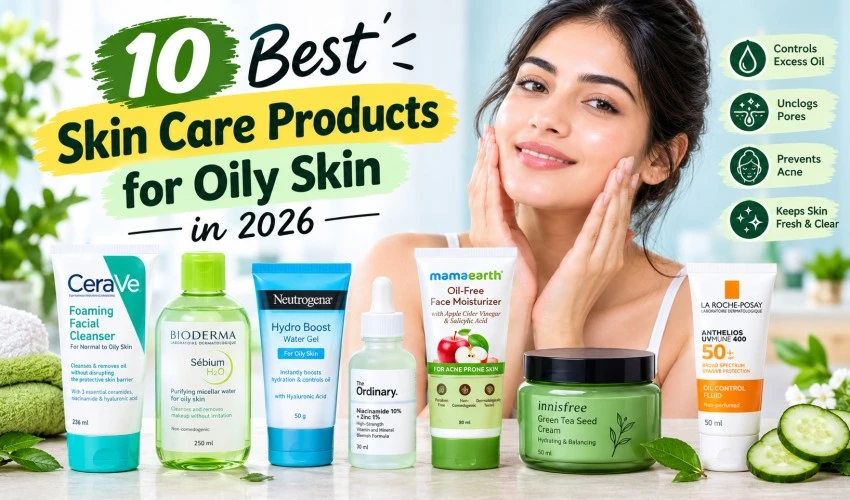
If your face looks glossy by lunchtime, your makeup slides off by evening or your pores seem permanently visible, you are dealing with oily skin. The cause is overactive sebaceous glands, influenced by genetics, hormones, humidity and sometimes stress. The solution is not to scrub harder or skip moisturizer. Dermatologists consistently advise removing excess oil without stripping the skin, and choosing products that are oil-free and non-comedogenic, meaning they are formulated not to clog pores. Below are ten dependable products and product types for 2026, along with the ingredients that matter and a simple routine to follow.
What to Look for in Skin Care for Oily Skin
Before buying anything, learn the labels. These ingredients tend to work well for oily and acne-prone skin:
- Salicylic acid (BHA): oil-soluble, so it can clean inside pores.
- Niacinamide: helps regulate the look of oil and refine pores.
- Hyaluronic acid and glycerin: lightweight hydrators that add water without grease.
- Retinoids (such as adapalene): help prevent clogged pores and breakouts over time.
- Clay (kaolin, bentonite): absorbs surface oil in masks.
- Zinc oxide or other mineral filters: gentle sun protection that suits sensitive skin.
Ingredients to be cautious about include heavy oils, thick butters, strong fragrance and high-alcohol toners, which can irritate and sometimes trigger even more oil.
1. CeraVe Foaming Facial Cleanser
A cleanser is the foundation of any oily skin routine, and this gel-to-foam formula is a long-time dermatologist favorite. It includes niacinamide and ceramides, so it cleans away oil and sunscreen without leaving the skin tight. It is affordable and widely available, and it works well morning and night. If your skin feels squeaky after washing, that is a sign you should switch to something gentler.
2. La Roche-Posay Effaclar Purifying Foaming Gel
For skin that is very shiny or breakout-prone, this cleanser offers a slightly deeper clean with a zinc-based formula designed for oily skin. It rinses clean and suits people who sweat a lot or live in humid climates. Use it once or twice daily and follow with a moisturizer, because even oily skin needs hydration after cleansing.
3. Paula’s Choice Skin Perfecting 2% BHA Liquid Exfoliant
Salicylic acid is arguably the hero ingredient for oily skin, and this leave-on exfoliant is one of the best-known options. It helps loosen blackheads, smooth rough texture and keep pores looking clearer. Start two or three nights a week and increase slowly. Overuse can cause dryness, peeling and irritation, so more is not better.
4. The Ordinary Niacinamide 10% + Zinc 1%
This budget-friendly serum is popular for helping balance the appearance of oil and minimize the look of pores. Niacinamide is generally well tolerated, though some people find 10% a bit strong, in which case a lower concentration may suit them better. Apply a few drops after cleansing and before moisturizer. Give it at least four to eight weeks before judging results.
5. Differin Adapalene Gel
Adapalene is a retinoid once available only by prescription and now sold over the counter in many countries. It helps unclog pores and prevent new breakouts, making it useful for oily skin that also gets acne. Apply a pea-sized amount at night to dry skin. Expect some dryness or purging in the first weeks, avoid combining it with strong exfoliants at the start, and never use it without sunscreen the next day. If you are pregnant or planning pregnancy, ask your doctor first.
6. Neutrogena Hydro Boost Water Gel
Skipping moisturizer is a common mistake. When skin is dehydrated, it can look oilier and feel uncomfortable. A lightweight gel moisturizer with hyaluronic acid delivers water without a heavy finish. It absorbs quickly, sits well under makeup and is a good daytime option. Check the current label, as the brand offers several variants, some with added oils or fragrance.
7. Cetaphil Pro Oil Absorbing Moisturizer SPF 30
A moisturizer that doubles as sun protection saves a step, and this oil-absorbing formula has been recommended by dermatologists for its matte finish. It is a practical choice for busy mornings. Even so, SPF in a moisturizer is only effective if you apply enough, so many dermatologists suggest a dedicated sunscreen for long days outdoors.
8. EltaMD UV Clear Broad-Spectrum SPF 46
Many people with oily skin skip sunscreen because they dislike the shine. A lightweight, oil-free formula solves that problem. This option includes zinc oxide and niacinamide and is formulated for acne-prone and sensitive skin. Alternatives such as La Roche-Posay Anthelios fluid sunscreens or Korean and Japanese gel sunscreens also work. Whichever you choose, use broad-spectrum SPF 30 or higher every day, since sunscreen is the single most protective step for long-term skin health.
9. Innisfree Super Volcanic Pore Clay Mask
A clay mask can temporarily soak up surface oil and leave skin feeling clean and matte, which makes it a nice weekly treat. Apply a thin layer to the T-zone or full face, leave for 10 minutes and rinse before it dries completely. Use once or twice a week at most; frequent masking can dry out the skin barrier.
10. Oil-Absorbing Blotting Sheets
Blotting papers, such as those from Clean & Clear, are a simple tool for midday shine. Press, do not rub, and the sheet lifts excess oil without disturbing makeup or adding product. They do not change how much oil your skin produces, but they are inexpensive, portable and handy for touch-ups.
A Simple Routine for Oily Skin
Morning:
- Cleanse with a gentle foaming cleanser.
- Apply niacinamide serum (optional).
- Use a lightweight gel moisturizer.
- Finish with oil-free sunscreen.
Evening:
- Remove sunscreen and makeup, then cleanse.
- Use BHA exfoliant or adapalene on alternating nights, not both at once at first.
- Apply a light moisturizer.
Keep the routine short. Using too many actives at once is a leading cause of irritation, redness and rebound oiliness.
Common Mistakes to Avoid
- Over-washing: cleansing more than twice a day can disrupt the skin barrier.
- Skipping moisturizer: dehydrated skin can look and feel greasier.
- Picking and squeezing: this causes inflammation, scarring and dark marks.
- Using harsh scrubs or alcohol toners: they irritate and may worsen oil and breakouts.
- Changing products constantly: most products need four to eight weeks to show results.
When to See a Dermatologist
See a professional if you have painful cystic acne, scarring, sudden changes in oiliness, irregular periods alongside acne or no improvement after two to three months of consistent care. A dermatologist can prescribe stronger options, such as topical antibiotics, tretinoin, hormonal treatments or oral medication, tailored to your needs.
Final Thoughts
The best products for oily skin keep things simple: a gentle cleanser, a targeted treatment such as salicylic acid or niacinamide, a lightweight moisturizer and daily sunscreen. Product lines and formulas are updated often and availability varies by country, so check the current ingredient list and price before buying, and patch test anything new. The brands named here are examples rather than endorsements. Be patient and consistent, and your skin should become calmer, clearer and less shiny over time.
This article is for general information only and is not a substitute for professional medical advice.