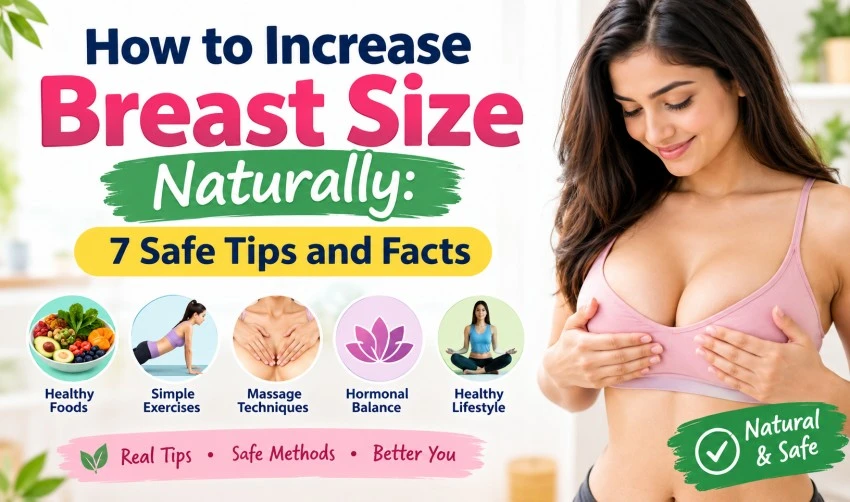
Few topics attract as many myths as breast size. Search online and you will find creams, pills, massages and “miracle” foods all promising a fuller bust within weeks. The honest truth is more modest: breast size is largely decided by genetics and hormones, and no natural method has been proven to permanently enlarge breast tissue. That does not mean you are out of options. Certain safe habits can improve how your chest looks and feels, support healthy breast tissue and help you feel more confident in your body. This guide separates fact from fiction and gives you seven practical tips worth trying.
What Actually Determines Breast Size?
Breasts are made mostly of fatty tissue, glandular tissue and connective ligaments. Their size and shape depend on several factors:
- Genetics: Your family history is the strongest predictor of your natural breast size.
- Hormones: Estrogen and progesterone drive breast development during puberty and cause temporary changes during the menstrual cycle, pregnancy and breastfeeding.
- Body fat: Because fat makes up a large share of breast volume, weight gain or loss often changes cup size.
- Age: Breast tissue becomes less dense and less firm over time, especially after menopause.
Understanding this helps set realistic expectations. Lifestyle changes can influence the appearance and support of your breasts, but they cannot rewrite your genetic blueprint.
1. Strengthen Your Chest Muscles
Breasts contain no muscle, but they sit on top of the pectoral muscles. Building these muscles can lift and firm the area beneath the breast, creating a fuller, more defined look, a little like adding a shelf under the tissue.
Effective exercises include:
- Push-ups (start on your knees if needed)
- Dumbbell chest presses and chest flyes
- Incline push-ups against a wall or bench
- Plank-to-push-up variations
Aim for two to three sessions per week, with a day of rest between workouts. Start with light weights and focus on slow, controlled movements. Do not expect cup size to jump; the benefit is better shape and firmness, not new breast tissue.
2. Fix Your Posture
Slouching rounds the shoulders and compresses the chest, making your bust look smaller than it is. Standing tall with your shoulders back and your chest open can instantly improve your silhouette.
Try these habits:
- Keep your ears aligned over your shoulders and your chin level.
- Take breaks from your desk every 30 to 45 minutes to stretch.
- Strengthen the upper back with rows, reverse flyes and shoulder blade squeezes.
- Stretch tight chest muscles in a doorway for 20 to 30 seconds.
Good posture also reduces neck and back pain, so the benefits go well beyond appearance.
3. Maintain a Healthy Weight
Since breasts contain a significant amount of fat, gaining weight can increase breast size, while losing weight often reduces it. However, you cannot choose where your body stores fat, and gaining weight just to enlarge your bust may not be healthy or effective.
If you are underweight, reaching a healthy body mass index under the guidance of a doctor or dietitian is reasonable and may add some fullness. If you are already at a healthy weight, deliberately gaining more is not recommended. Focus on steady, sustainable habits rather than rapid changes, because frequent weight swings can also stretch the skin.
4. Eat a Balanced, Nutrient-Rich Diet
No single food will make your breasts grow, but good nutrition supports hormone balance, skin elasticity and overall tissue health. Build your meals around:
- Healthy fats: avocados, nuts, seeds, olive oil and fatty fish
- Lean protein: eggs, legumes, poultry, tofu and Greek yogurt
- Fruits and vegetables: especially those rich in vitamin C, which supports collagen production
- Whole grains: for steady energy and fiber
Some foods contain phytoestrogens, plant compounds that weakly mimic estrogen. Soy, flaxseed and chickpeas are examples. Eating them in normal food amounts is generally safe, but there is no solid evidence that they enlarge breasts. Avoid taking concentrated supplements without medical advice.
5. Wear a Properly Fitted Bra
An estimated majority of women wear the wrong bra size. A band that is too loose or cups that are too small can flatten, spill or sag the breasts, changing how large they look. A well-fitted bra lifts and rounds the bust and can make you appear up to a cup size fuller.
Get measured every six to twelve months, and again after weight changes, pregnancy or breastfeeding. Look for a snug band that stays level, cups that fully contain the tissue, and straps that do not dig into your shoulders. Padded, push-up or balconette styles can add shape instantly without any health risk.
6. Prioritize Sleep, Stress Control and Hormone Health
Chronic stress and poor sleep can disrupt hormones such as cortisol and estrogen, affecting weight, skin and menstrual regularity. While better sleep will not enlarge your breasts, it supports the healthy hormonal environment your body needs.
Try to get seven to nine hours of sleep each night, exercise regularly, limit alcohol and avoid smoking, which damages skin elasticity. If your periods are irregular or absent, or you suspect a hormonal imbalance such as polycystic ovary syndrome or thyroid disease, see a healthcare provider rather than self-treating.
7. Take Care of Your Skin and Support the Tissue
Firm, hydrated skin makes the breasts look fuller and more youthful. Moisturize daily, use sunscreen on exposed skin, drink enough water and wear a supportive sports bra during exercise to protect the ligaments that hold breast tissue in place.
Gentle breast massage is popular and can feel relaxing, and it helps you become familiar with how your breasts normally feel, which is useful for spotting changes early. Just be aware that there is no scientific proof massage increases breast size.
Popular Myths and What the Evidence Says
- “Enlargement creams work.” Most creams only moisturize the skin. Products claiming to grow breast tissue lack reliable clinical evidence, and some contain hormone-like ingredients.
- “Herbal pills like fenugreek, fennel or wild yam can increase size.” Studies are small, inconsistent and often poorly designed. These herbs may interact with medications or affect hormones, and they may be unsuitable if you have a hormone-sensitive condition or are pregnant.
- “Breast pumps and vacuum devices enlarge breasts permanently.” Any swelling is temporary, and misuse can cause bruising or tissue damage.
- “Birth control pills make breasts bigger.” Some women notice temporary fullness, but this is usually fluid retention rather than true growth. Never start or change medication only for this purpose.
When to Talk to a Doctor
See a healthcare professional if you notice a lump, nipple discharge, skin dimpling, sudden size change in one breast, persistent pain or marked asymmetry. Also consult a doctor if you are over 16 and have not begun breast development, or if you are considering any supplement or hormone treatment.
The only proven way to permanently increase breast size is cosmetic surgery, such as implants or fat transfer. These procedures carry risks, costs and recovery time, so they should only be considered after consulting a board-certified plastic surgeon. Many people also find that accepting and styling their natural shape is the most satisfying path.
Final Thoughts
Natural methods will not dramatically change your cup size, but they can help you look and feel your best. Strong chest muscles, good posture, a balanced diet, a correctly fitted bra and healthy skin habits are safe, affordable steps with benefits for your whole body. Be wary of any product promising quick, guaranteed growth, and remember that healthy, beautiful breasts come in every size.
This article is for general information only and is not a substitute for professional medical advice.